
On the yellow leaves of autumn and in the cool breeze of the Iranian month of Mehr (September-October), a ceremony is held according to Iranian customs and traditions comparable to Nowruz. Mehregan or Mehrgan is a reminder of a time when the sun was in Libra and the ancient Persian calendar marked the beginning of the second half of the year with rituals and festivities. The ceremony symbolized affection, loyalty, and friendship, as well as gratitude for the blessings of the earth and the sun.
Mehregan is one of the ancient Zoroastrian traditions. Like Nowruz, it is associated with the division of the year into six periods and was celebrated according to customs that varied among different social classes. Today, the ceremony remains an important part of Iranian cultural heritage. In autumn of 2024, it was also inscribed as Iran’s twenty-fifth item on the UNESCO intangible cultural heritage list. If you would like to learn more about the history of this ancient Iranian ceremony, its traditions, and its cultural significance, join us in this article from Destination Iran.
Mehregan is the sixth day of the month of Mehr, and Iranians honor this day because Mehr is one of the great deities; therefore, this day has been named Mehregan.
– Al-Biruni
When Is Mehregan Celebrated?
In the Zoroastrian or Avestan calendar, each month had exactly 30 days, and there were twelve months in a year. Each month and each of its thirty days had a specific name. Whenever the name of a day coincided with the name of the month, that day was celebrated in a ceremony.
For example, the sixteenth day of every month was called Mehr. Therefore, the sixteenth day of the month of Mehr was celebrated as Mehregan. From a linguistic perspective, the suffix “-gan” was added to the name of a month to convey the meaning of a ceremony, as in Mehregan, Tirgan, and other Iranian ceremonies.
References in the Avesta indicate that different calendars and seasonal divisions could affect the date of the ceremony. This was partly due to the lack of a leap-year system or differences in calculations.
According to the ancient Avestan calendar, the year was sometimes divided into two seasons: the Great Summer (Hama) and the Great Winter (Zayana). Under this system, Mehregan marked the beginning of the Great Winter. In ancient times, when the old Avestan calendar was used in Iran, the year was divided into these two seasons.
According to the Middle Persian book Bundahishn, summer lasted for seven months, or 210 days, while winter lasted for five months and five days, or 155 days. During the Sasanian period, or possibly earlier, these unequal seasons were replaced by four equal seasons: Vahār, Hāmīn, Pātiz, and Winter. These eventually became the four seasons known today as spring, summer, autumn, and winter.
Under this seasonal division, Nowruz was celebrated at the beginning of spring, in the month of Farvardin, while Mehregan was celebrated at the beginning of autumn, in the month of Mehr. The two ceremonies followed similar traditions, and neither was considered superior to the other.
According to Ferdowsi’s Shahnameh, Jamshid, the legendary Iranian king, wore splendid clothes on the first day of spring and faced east as he sat upon his royal throne. He adorned his royal robes with jewels and precious stones so that the sunlight would shine brilliantly upon them in his court. That day came to be known as Nowruz.
Based on this account, Mehregan should have been celebrated on the first day of autumn. However, because the sixteenth day of autumn was also called Mehr, the main celebration took place on that day, when the names of the month and the day coincided.
A similar page worth reading: Zoroastrianism (Mazdayasna); Iran’s Ancient Religion
The Meaning of Mehr (Mithra) and the Origin of the Name
In the Avesta, the sacred scripture of Zoroastrianism, Mehr is described as one of the greatest deities worshipped by the Indo-Iranian peoples before Zoroaster. In one of the hymns of the Avesta, Mehr is associated with light and the rays of the sun.
The name and concept of Mithra also appear in the ancient Indian Vedas. A written reference dating to the fourteenth century BC mentions Mithra. In the Vedic tradition, Mithra was more closely associated with friendship, companionship, and assistance than directly with the sun or its rays.
Another important source concerning this deity is the Mihr Yasht, one of the principal sections of the Avesta devoted to Mithra. Its introduction describes Ahura Mazda as having created Mithra equal to himself in greatness, glory, and power.
.
Mehregan Celebration Traditions
The way Mehregan was celebrated was very similar to Nowruz. The ceremony was accompanied by a range of customs and ceremonies. Some of the recorded traditions include:
- People presenting their grievances and seeking justice.
- The presentation of gifts by the people and their registration in a special royal record.
- The arrival of an auspicious messenger before the king, who would sing special songs in different melodies.
- The observance of Great Mehregan and Common Mehregan, along with the association of various events and occurrences with this ceremony.
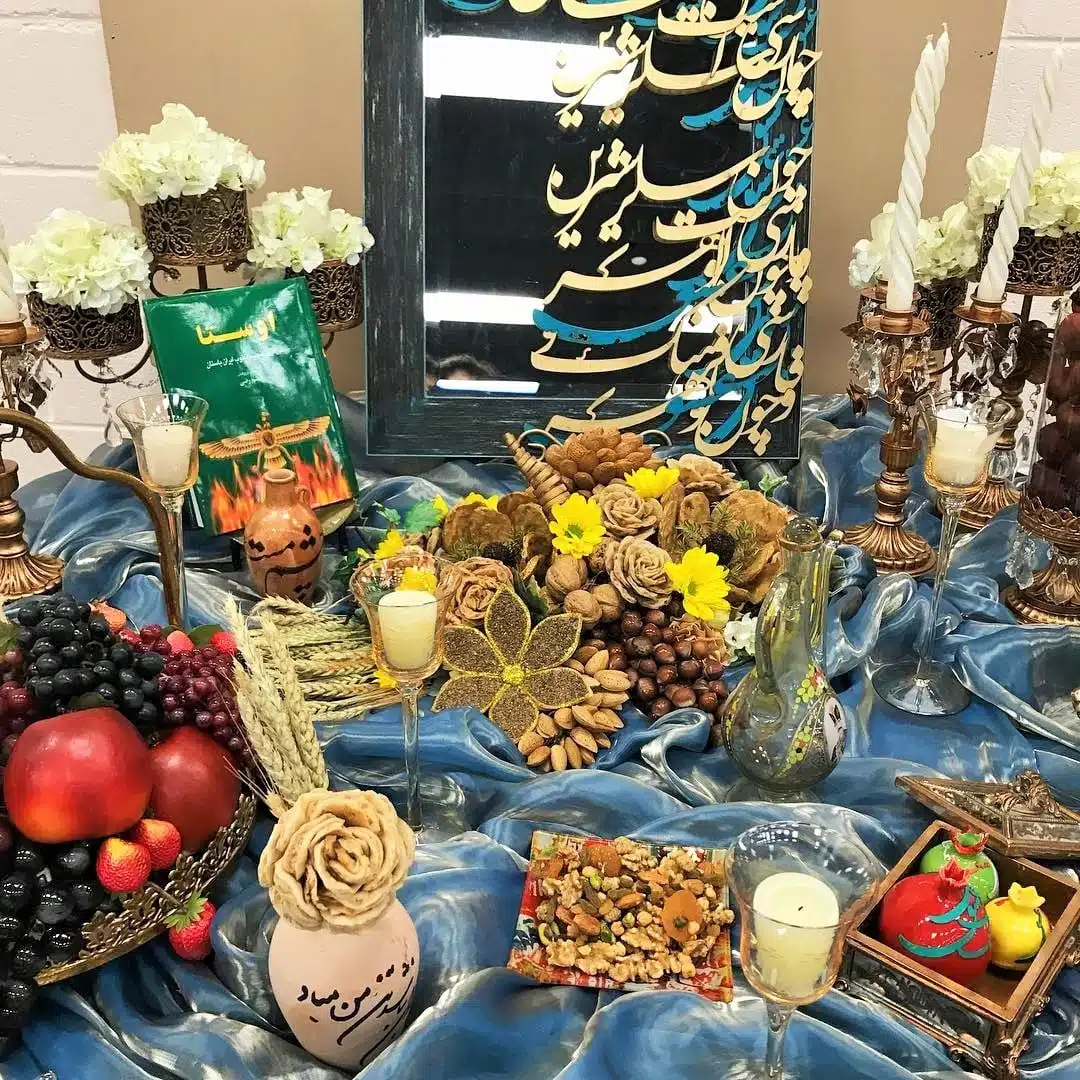
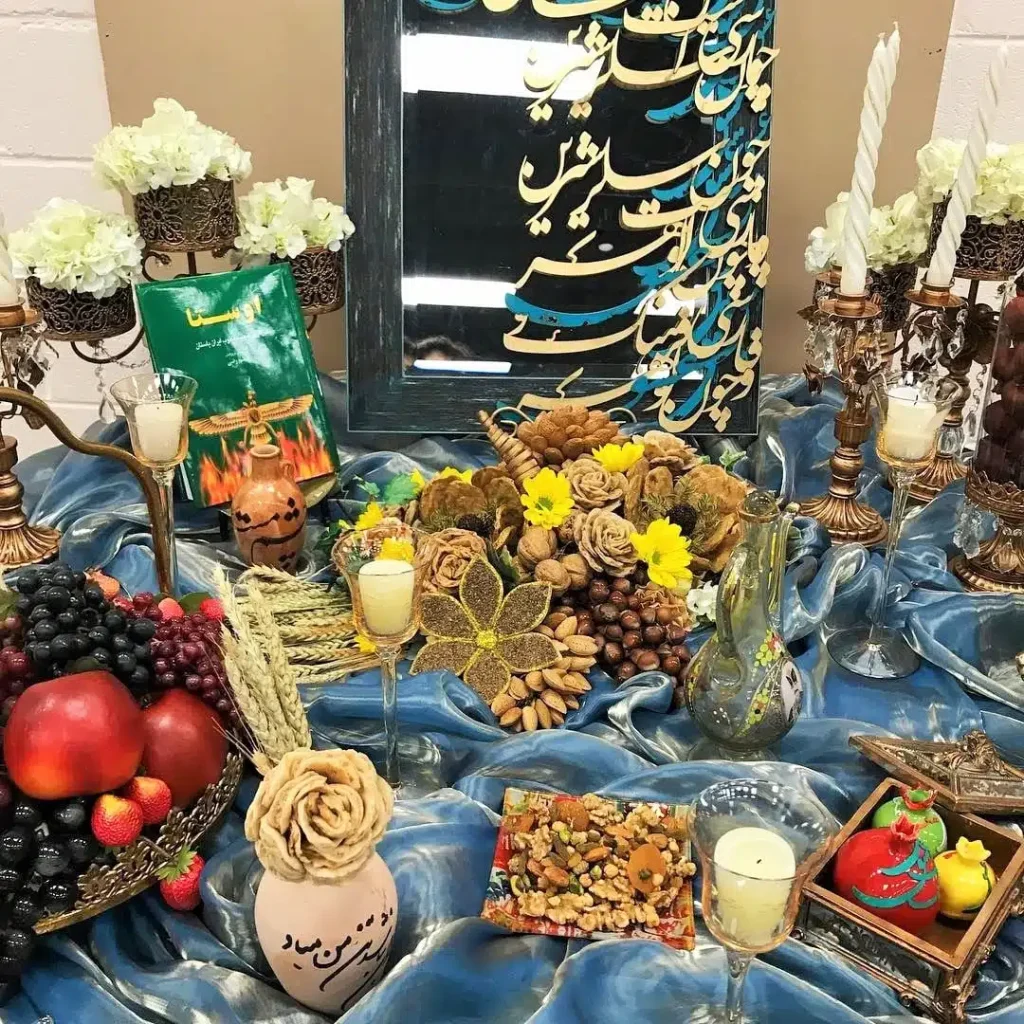
- A sermon delivered by the chief Zoroastrian priest and the preparation of a special Mehregan dining table, similar in some respects to the Haft-Seen dining table prepared for Nowruz.
Setting the traditional Mehregan dining table was one of the most important parts of the celebration. According to historical accounts, the first person to appear before the king would engage him in conversation and recite special songs.
Afterward, a Zoroastrian priest would enter and sit beside the table. While chanting, he would bless the foods and items placed upon it. The table contained a variety of foods and plants, including citron, sugar, jujube, apples, a cluster of white grapes, seven branches from seven different plants, small round loaves made from legume flour, wild rue (Esfand), milk, and thyme.
These elements reflected the connection between Mehregan, the changing seasons, agricultural abundance, and gratitude for nature’s gifts.
A Zoroastrian news website in Persian provides further information about Mehregan and other ancient Iranian traditions for those interested in learning more about these ceremonies.
Learn More About Mehregan and Other Cultural Attractions of Iran
Mehregan and other Iranian ceremonies are part of the country’s cultural heritage. Like many traditional customs, however, they are at risk of gradually being forgotten as lifestyles and social practices change.
One way of preserving these traditions is to study them, document their history, and introduce them to others as part of Iran’s cultural heritage and tourism attractions.
When traveling through Iran, whether on an Iran tour or independently, take some time to learn about the cultural heritage of the cities and regions you visit.
Destination Iran introduces cultural attractions throughout the country and invites travelers to learn more about traditions such as Mehregan and the historical values associated with them.
Frequently Asked Questions About Mehregan ceremony
If you cannot find the answer to your question here, leave a comment below, and we will try to answer it as soon as possible.
When is Mehregan celebrated and what does it mean?
Mehregan is celebrated in autumn, during the month of Mehr, usually around October. The ceremony is associated with Mehr or Mithra and is traditionally connected with gratitude for the sun, nature, and the blessings of the earth.
What is the history and origin of Mehregan ceremony?
Mehregan has its roots in ancient Iranian traditions associated with Mithra. It was celebrated in pre-Islamic Iran, including during the Achaemenid period and earlier traditions of Mithra worship. The ceremony represents a connection between people, nature, and Mehr (Mithra).
What are the common customs and traditions of Mehregan?
Common traditions associated with Mehregan include:
- Preparing special seasonal foods, including dishes made with grains and berries.
- Holding family gatherings and festive meals.
- Reciting traditional poems and writing good wishes on paper.
- Visiting friends and relatives and exchanging greetings.
What impact does Mehregan have on Iranian culture?
Mehregan strengthens national identity, secures family relations and keeps respect for nature alive in Iranian culture.
How can Mehregan be celebrated at home?
You can celebrate Mehregan at home by:
- Preparing a colorful dining table with seasonal fruits, grains, and other traditional foods.
- Reading poems and stories associated with Mehregan.
- Taking part in family activities such as drawing, preparing traditional sweets, or sharing a festive meal.
What foods and rituals are associated with Mehregan?
Traditional Mehregan celebrations may include seasonal foods, roasted grains, jams, fruits, and other items associated with autumn. Historical accounts also mention rituals connected with honoring the sun and symbolic offerings.